Mai Chau or Pu Luong: two quiet valleys south-west of Hanoi
Two rice valleys sit a half-day south-west of Hanoi, and travellers keep asking which one. How Mai Chau and Pu Luong really differ, what each suits, and how to see both without doubling back.
Hoang Anh, host at Rustic House · · 7 min read
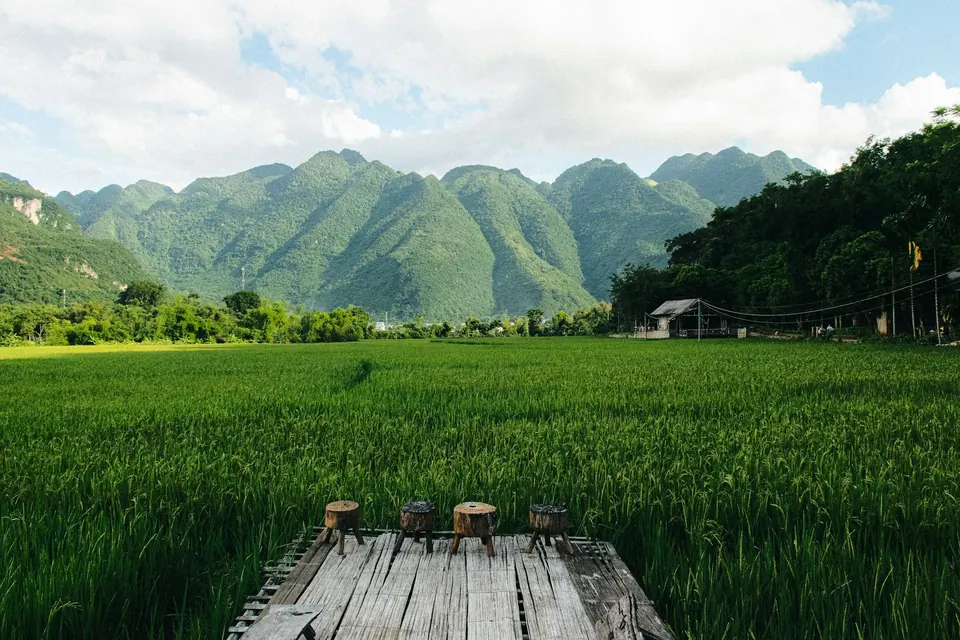
Photo: Jean-Baptiste NORE on Unsplash
The short answer
Take Mai Chau if you want the easier break. It is the closer valley, about 140 to 150 kilometres south-west of Hanoi, three to four hours on a good road. The floor is flat, so you see it from a bicycle, rolling between stilt-house villages. One or two nights is enough, and it suits children, tired knees and anyone who wants countryside without hard walking.
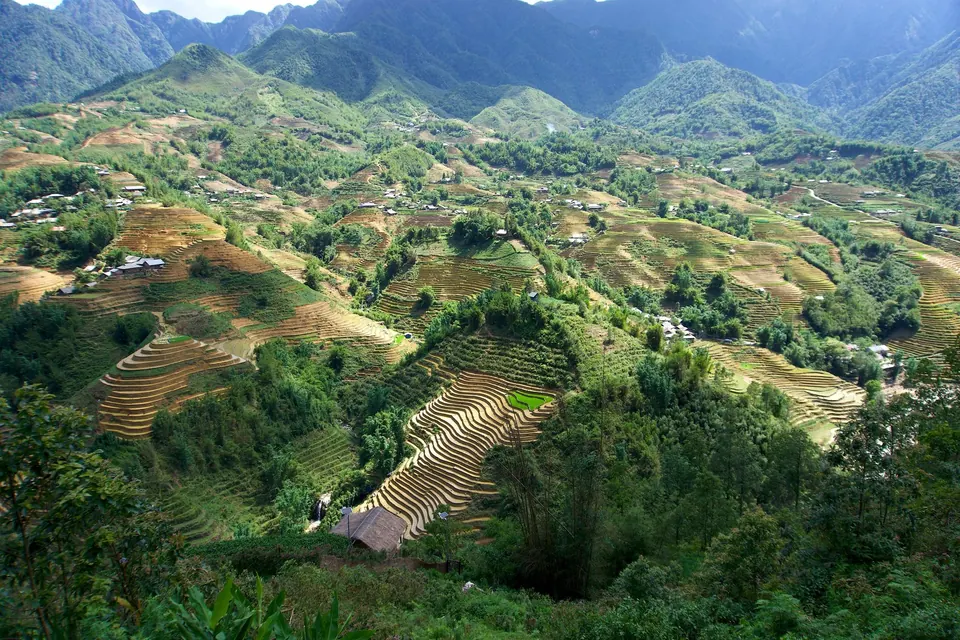
Take Pu Luong if you have three days and want the wilder half. It sits further from the city, about 160 kilometres, and the rice cannot be flat there, so it climbs the valley walls in terraces. Wooden water wheels still lift water from the streams to the fields. You arrive on a shared limousine van or with a private car, and you move between villages on foot.
Now the honest part, as always. We are a family on Cat Ba, at the other end of the north, and we do not run trips in either valley. This guide is what we would tell a friend who asked: recent guides and trip reports read side by side and checked against each other. Where they disagree, we say so.
A note on names. Since July 2025 Vietnam has merged several provinces. Mai Chau's old province, Hoa Binh, is now part of Phu Tho; Pu Luong is still in Thanh Hoa. Maps and booking pages update at their own pace, so one site may show you the old name while the next shows the new one. The roads, the valleys and the villages themselves have not moved.
Two valleys, one road between them
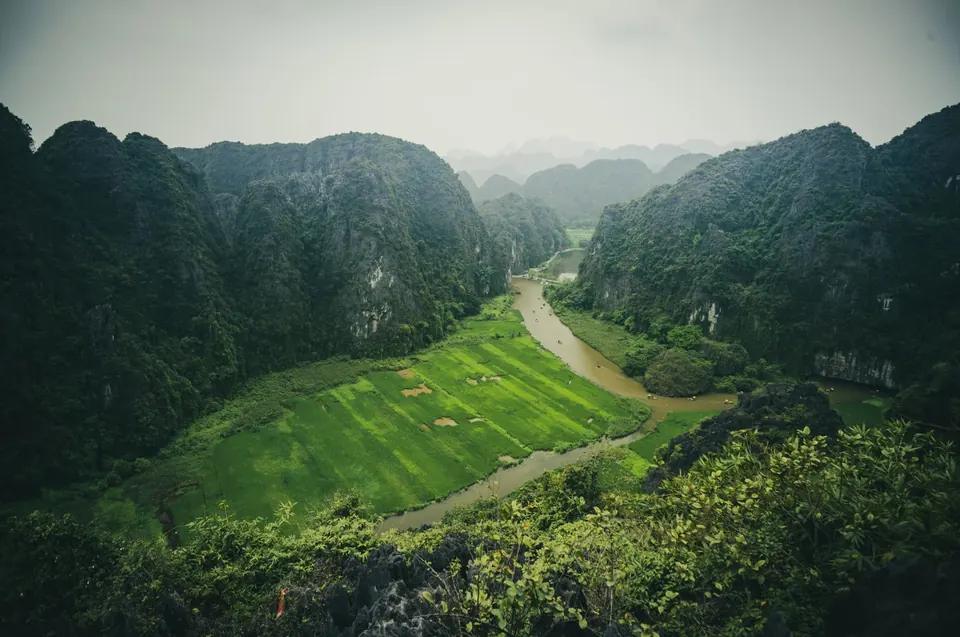
Mai Chau is a bowl of paddies ringed by limestone walls, 400 to 600 metres above the sea: warm in the day, cool on the porch at night. The White Thai have farmed this floor for more than seven hundred years, and their wooden stilt houses still line the lanes of Ban Lac and Pom Coong. The three kilometres between the two villages are flat, and a bicycle is the best way to cover them: buffalo in the paddies, looms under the houses, almost no traffic to speak of.
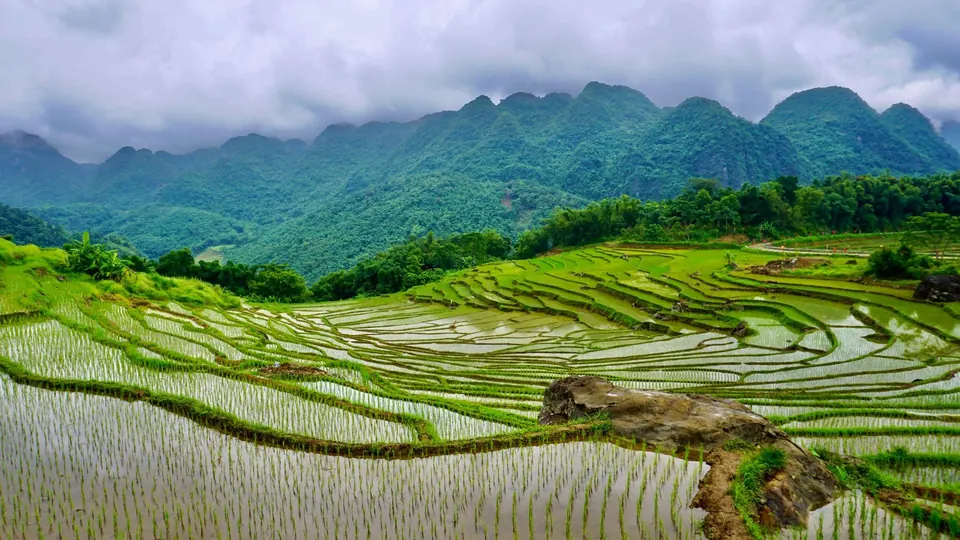
Pu Luong is a nature reserve of steep valleys where the fields climb the slopes in terraces. Most families are Black Thai; their grandparents came down the Cham river on bamboo boats, and farming still comes first, guests second. The wooden water wheels on the streams are working machines, not museum pieces. The two valleys are only 40 kilometres apart, joined by a single road, which is why we refuse to treat them as rivals.
The comparison, side by side:
| Question | Mai Chau | Pu Luong |
|---|---|---|
| Distance | 140 to 150 km | About 160 km |
| Drive time | 3 to 4 hours | 4 to 4.5 hours |
| The road | One pass, then the valley floor | One road in, long and steep |
| Scenery | Flat paddies in a green bowl | Terraces on valley walls |
| Getting around | Bicycle | On foot |
| Sleeping | Stilt houses, some lodges | Family houses, few websites |
| Best for | Families, 1 to 2 nights | Walkers, 3 slow days |
Mai Chau is a valley you look at. Pu Luong is a valley you walk into.
Getting there: two different arrivals
Mai Chau is the simple arrival. Shared minibuses and limousine vans leave Hanoi's Old Quarter most mornings and reach the valley in three to four hours, usually stopping at Thung Khe pass, where white stone makes the mountains look dusted with snow. A public bus also runs from the city's bus stations and sets you down at a junction a short taxi ride from the villages. The pass has tight bends, fog and trucks, so we suggest a van with a local driver over a rented motorbike.
Pu Luong needs planning, and we want to be clear about why: there is no train, and no public bus runs into the reserve. A shared limousine van or a private car with a driver is how nearly everyone arrives, and the drive takes four to four and a half hours. Book your first bed before you leave Hanoi. Many family homestays have no website and no listing anywhere, so ask your Hanoi hotel to call ahead in Vietnamese.
Green months, golden months, smoke
Both valleys grow two rice crops, and the calendar decides what you see. In Mai Chau the main harvest turns the bowl golden in late September and early October. One traveller who knows the valley well notes a smaller gold in April and May, when the first crop comes in. From November to April the paddies are bare brown earth, though the mountains stay green. Pu Luong is at its greenest in May and June and golden through September and October, and beds fill first in those weeks, so book ahead. One honest detail: after the autumn harvest, families burn the stubble, and for a while smoke hangs over the terraces. Photographers chase that light; if smoke would spoil your trip, come in the green weeks instead.
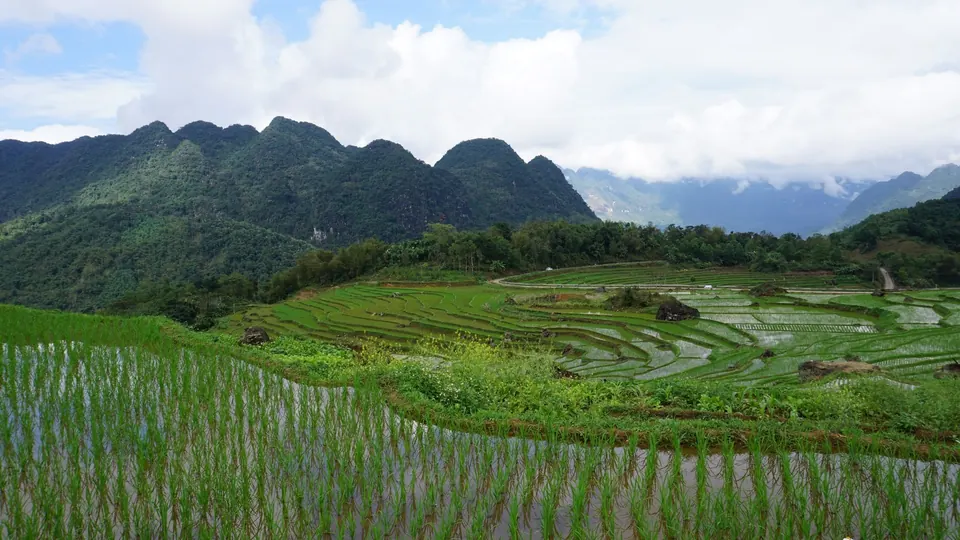
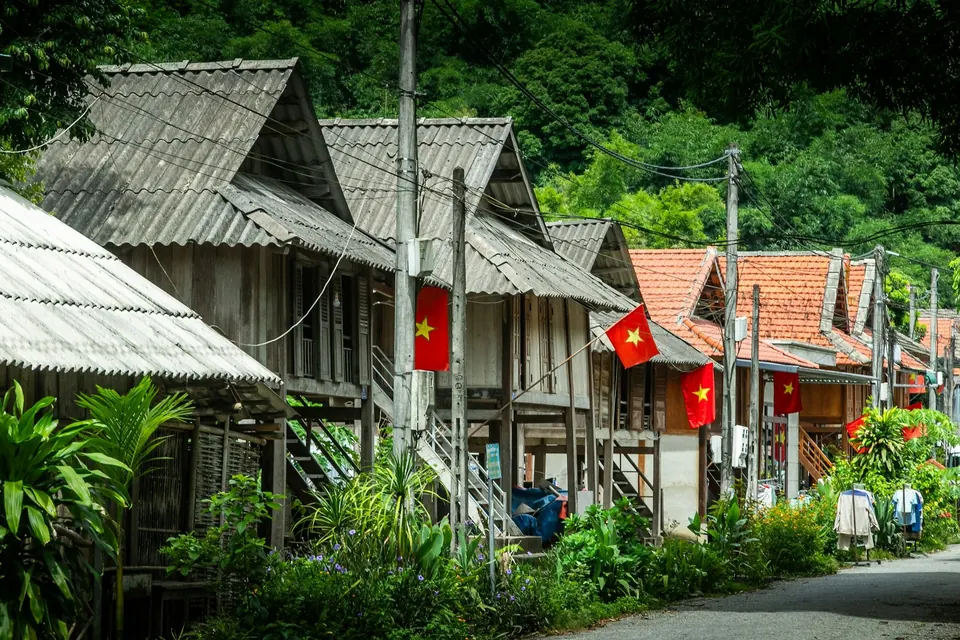
In Mai Chau a bed in a stilt house costs about 150,000 to 400,000 dong a night, and that usually includes dinner with the family and breakfast. You sleep on a mattress, often behind a curtain, with a shared bathroom. Some homestays put on Thai dance and music in the evening; others leave you on the porch with tea. Either way the village is quiet soon after, and prices move with the seasons, so check close to your dates.
In Pu Luong, family houses hang handwritten guesthouse signs and charge around 200,000 to 300,000 dong a person, dinner and breakfast included. Hosts speak little English, so arrange the first night before you arrive and order dinner when you do. The houses go quiet by nine, the stars are worth stepping out for, and phone signal drops away the deeper you walk, so download your maps in Hanoi.
Bring cash to either valley. Mai Chau has very few machines and they run dry at weekends; in Pu Luong the nearest one is in a town about twenty kilometres from the reserve. Withdraw dong in Hanoi and keep it in two pockets.
Four days, no turning back
If you have four days, stop choosing. The valleys sit 40 kilometres apart on one road, and a loop means no doubling back. Day one, leave Hanoi after breakfast and reach Mai Chau for a late lunch. Day two, cycle the valley floor and sleep in the same bed again. Day three, take the one road across to Pu Luong, walk down through the terraces to the water wheels, and eat with a family. Day four, follow the stream to Hieu waterfall, meet your driver after lunch, and be back in Hanoi for a late dinner. Two landscapes, one bag, no backtracking.
Short on time? Stay in Mai Chau alone and save Pu Luong for a second trip. Two nights is the sweet spot for the valley; squeezing both into a weekend means you will see mostly road. And if you would rather walk than ride at all, reverse the loop and give Pu Luong the bigger share.
After the valleys
Travellers often finish these valleys rested and hungry for the sea, and that is where we come in. Every road from Mai Chau or Pu Luong to Cat Ba runs through Hanoi, so the connection you choose matters more than the price you pay. Tell us the day your valley trip ends and we will pick the transfer so you reach the island in daylight. The car from Hanoi to our door is one we run ourselves, and the bay does the rest.
What we read for this guide
Vietnam Coracle's guide to Pu Luong homestays and villages, The Vietnam Guides' two-day Pu Luong itinerary, How To Travel Vietnam's Mai Chau cultural guide, and trip reports by independent travellers and local operators, read in autumn 2026 and checked against each other. Bus fares, homestay rates and rice dates shift from season to season, so treat every number here as a starting point and check again close to your dates. If you are unsure about a detail, message us: if we don't know, we will say so and find out.
Hoang Anh, host at Rustic House
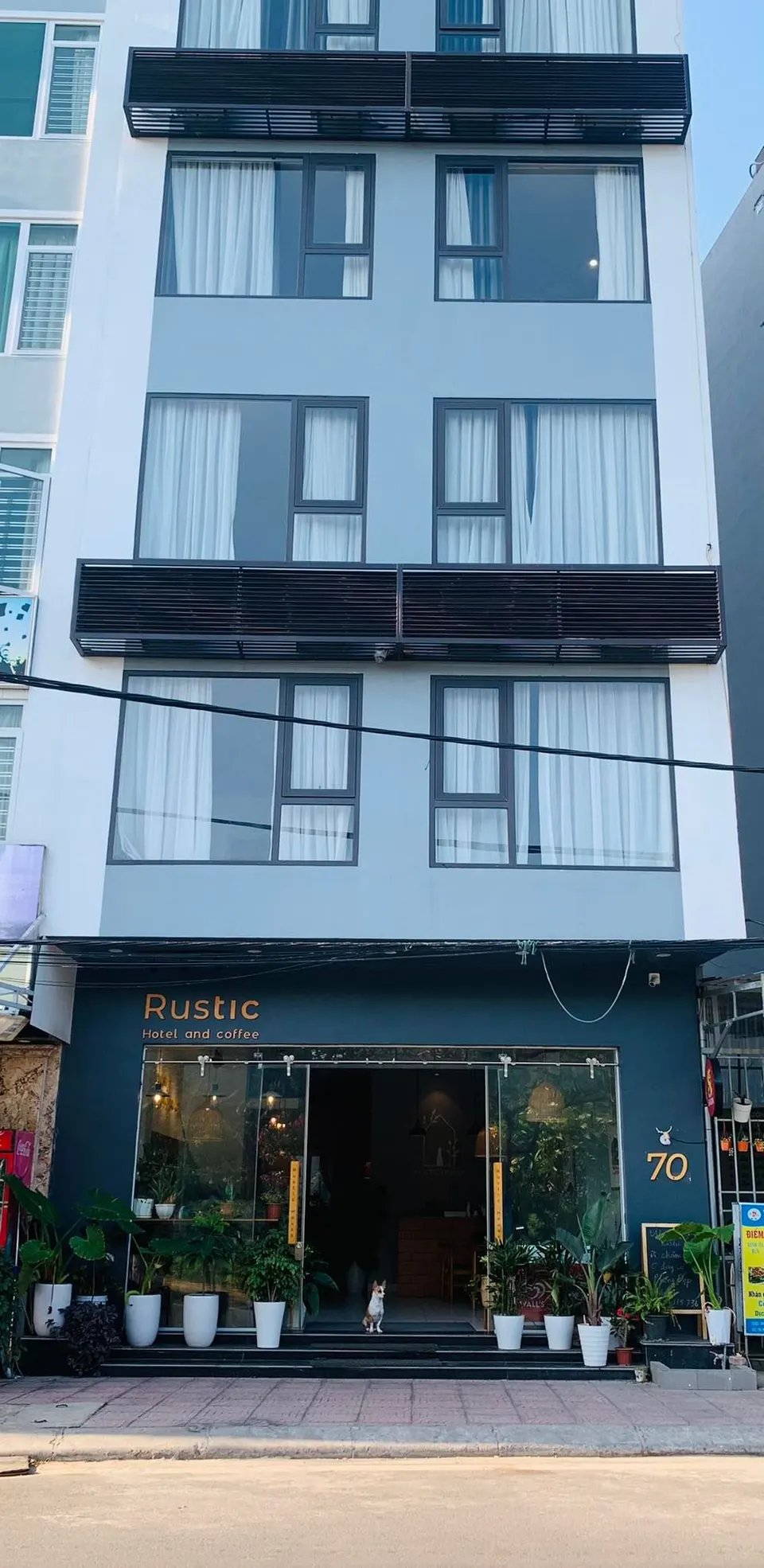
Written on Cat Ba, from Rustic House at 70 Tung Dinh. Questions about your own dates? Ask on WhatsApp.