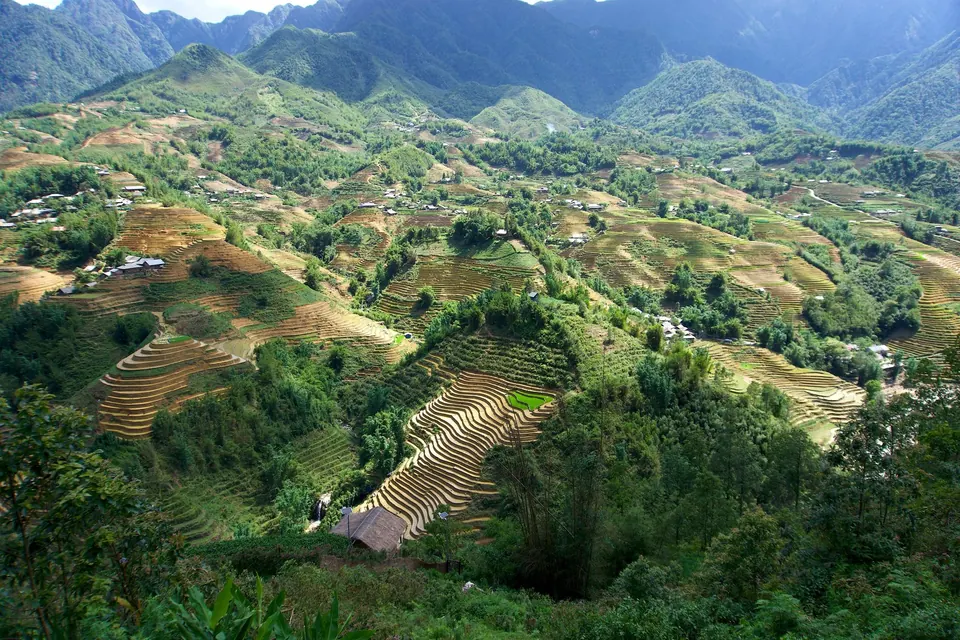
Hiking near Ha Long Bay: which trail, how hard, and when to start
One spare morning near Ha Long Bay: where the real walk is, how hard it gets, which months suit it, and why the first two hours matter.
Hoang Anh, host at Rustic House · · Updated · 6 min read
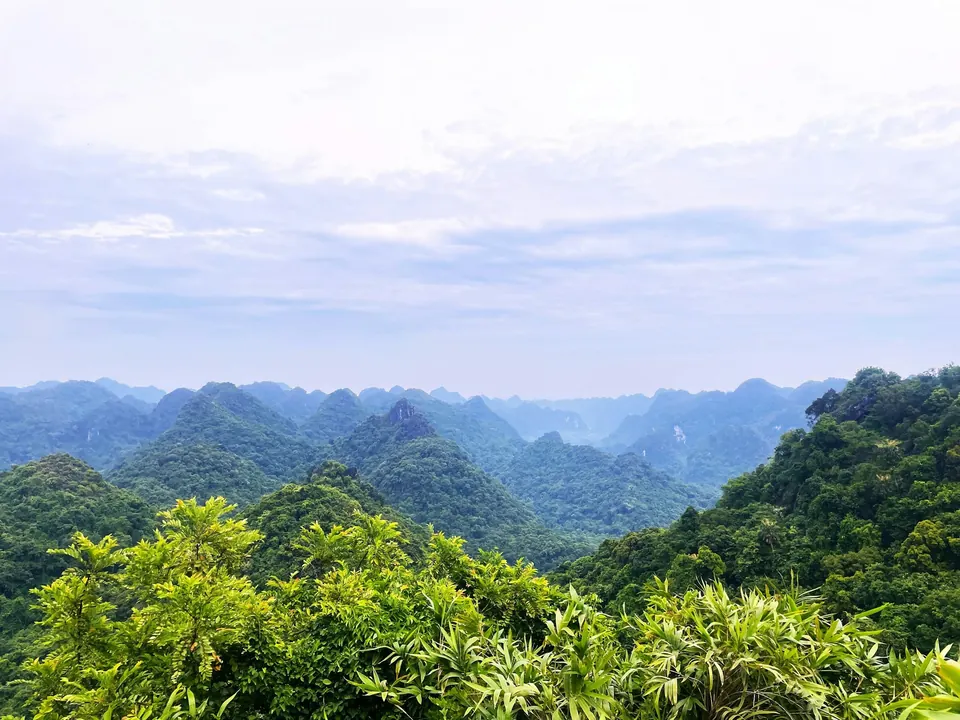
Photo: Ronin on Unsplash
The short answer
Yes, there is a real walk for hiking near Ha Long Bay: it is on Cat Ba Island, in the Cat Ba Archipelago that UNESCO lists together with Ha Long Bay. It is the climb through Kim Giao forest to the Ngu Lam lookout, about 3.6 km return, and our morning allows about two hours for it. It is moderate: steep sections on worn limestone and tree roots, then a short scramble over exposed rock near the top. We pick guests up at 07:30 and go into the park at 08:00. The park gate opens at 7:00, so check the hours close to your dates.
If the climb is too much, Trung Trang Cave is lit and marked, and the park puts it among its short routes. Our botanical garden loop suits the same gentle morning. At the other end sits the long walk to Viet Hai village: 12 km one way, five to six hours.
Some honesty about who is writing this. We run Rustic House in Cat Ba Town, and the trekking morning we sell on this site climbs this same hill. Where our sources disagree, we say so.
A name note: Cat Ba is part of Hai Phong City, which grew in 2025 when Hai Duong merged into it. The park's own website gives its address as Cat Hai Special Zone, Hai Phong.

Where the walk is, and how it fits hiking near Ha Long Bay
The park was set up in 1986 and covers over 17,000 hectares of forest and sea. UNESCO recognised the Cat Ba biosphere reserve in 2004. The island itself is over 140 square kilometres.
Getting there from Hanoi takes three to five hours depending on the route. There is no airport on the island: you take a bus, then a short ferry between the Got and Van Vieng piers. Because of that, two days works well when Cat Ba is one stop on a longer trip. If you are still planning the wider route, see how many days in northern Vietnam.
The park's trails compared
The park lists five official routes on its website. Here are the ones with a length or a time, next to the one we walk.
| Route | Length | Time the park gives | Suits |
|---|---|---|---|
| Kim Giao forest to Ngu Lam peak | About 3.6 km return on our trek | Approx. 2 hours | The main climb, a lookout over the islands |
| Environment Education Trail | 2.5 km | 1 to 2 hours | A gentler walk |
| Trung Trang Cave | Not listed | 1 to 2 hours, short routes | Lit and marked, slippery stone |
| Frog Pond to Viet Hai village | 12 km one way | 5 to 6 hours | The long crossing |
The park's own route name, Kim Giao to Ngu Lam to Trung Trang Cave, carries 1.5 km, while our page says about 3.6 km return, so the two figures differ.
Two more routes appear on the park's list without a length: Mangrove and Thien Long Cave, and Ninh Tiep Field to Navy Peak. One more thing we are open about: our own trip page puts the Viet Hai walk at 14 km, while two outside sources say 12 km, and routes vary with where you start. For the village itself, see Viet Hai village by bike, boat or on foot.
How hard is the hike, honestly
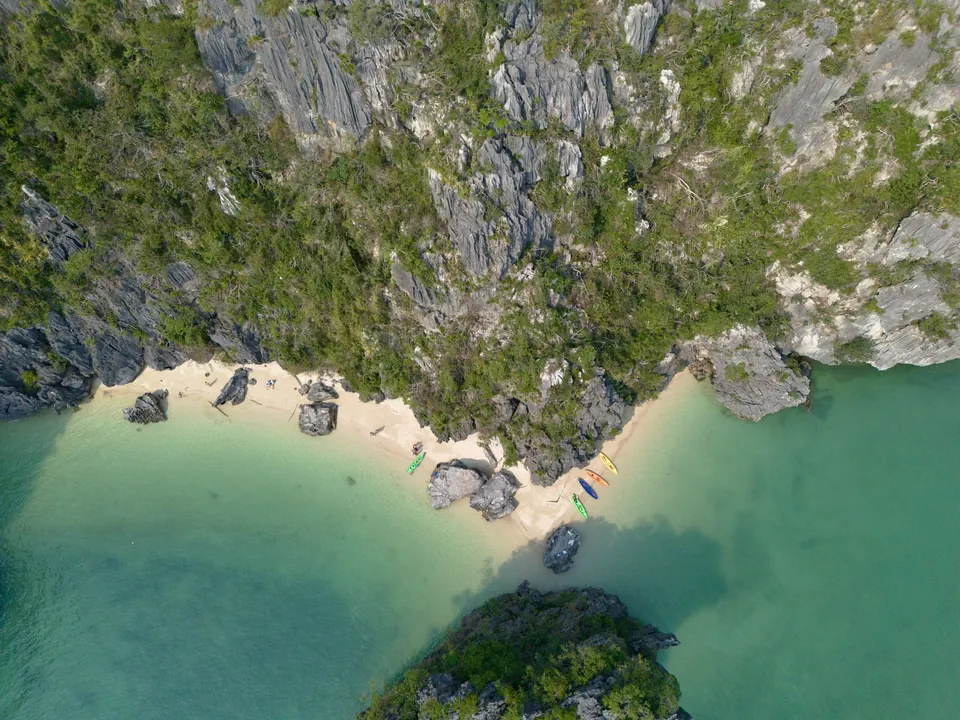
Our climb is moderate, and that is fair. Expect steep sections on worn limestone and tree roots, and a short scramble over exposed rock near the top. Wet stone is the most common cause of injury in this park, which tells you the danger is a slip, not a cliff. The hill is not trying to hurt anyone. It is worn limestone, and wet limestone is where people slip.
You need to be reasonably fit, and ready for a short scramble over exposed rock near the top. Confident walkers from around eight manage it, with one adult per child on the final scramble. Younger children suit the cave and garden loop better. With knee or ankle trouble, tell us when you book and we suggest the gentler cave and garden walk.
The long crossing is another matter. One guide describes a steady climb at the start, side paths that criss-cross and poor signage, and a stretch of sharp limestone where injury is most likely.
What time to start, and which months
We leave town at 07:30 on purpose: the first two hours are the coolest of the day, the only window when the forest is properly active. The morning runs from 07:30 to 12:00. For the long crossing, two guides say to be there very early. One of them adds that tree cover is patchy and heat and humidity stay high.
On months, our window is November to April, drier and cooler. One hiking guide rates late September to November and March to April best, and warns of a higher risk of injury in the rainy season from May to September. Cat Ba guides add that fog or rain from December to February can make forest trails slippery but still doable. This is the rain-day count for Hai Phong, the nearest official station.
| Month | Rain days (Hai Phong) |
|---|---|
| October | 9 |
| November | 7 |
| December | 7 |
| January | 11 |
| February | 13 |
| March | 19 |
| April | 14 |
At the Hai Phong station, the nearest official one, March has the most rain days of the year (19), while Vietnam Coracle rates March to April among the best hiking months.
Light rain we still walk, because the canopy takes most of it. Heavy rain makes the limestone genuinely dangerous, and then we move you to another morning. For the wider picture, see best time to visit northern Vietnam and Lan Ha Bay weather month by month.
The park gives the same view to everyone who climbs. The early hour adds a forest that is properly active around you.
Wildlife, what to pack, and what a guide adds
Start with what you will not see. The park says the Cat Ba langur is critically endangered, lives only in the limestone mountain forests of the archipelago, and numbers about 90. You will almost certainly not see one. What the park does list is rich: 63 mammal and 209 bird species. One 2025 guide mentions birds and butterflies on the Ngu Lam climb.
Pack light and pack right:
- Shoes with grip, because flip flops do not come up this hill, and we say so at pickup.
- Two litres of water, insect repellent and long sleeves.
- A small daypack, sunscreen and a hat.
On the long walk to Viet Hai, side paths criss-cross and the signage is poor. Boats from Viet Hai back to Ben Beo do not leave very often, which is why walkers going one way can get stuck at the far end. The 80,000 VND park entrance is already in our price. Other fees change, so check close to your dates.
After the forest: pairing the walk with a bay day
Our half day trek runs 07:30 to 12:00, takes eight guests at most, and costs $35 per person, with the park fee, transfer, guide and drinking water included. With more days, the two day combo from $119 adds the bay, and on the second morning you choose between the forest and the Viet Hai valley. The private three day trip from $229 makes the trek the one demanding morning of the plan. If a cruise suits you better, Celina of the Sea is from $165 per guest, sharing a cabin, for two days and one night. Message us on WhatsApp +84 961 737 103 with your dates and group size.

What we read for this guide
We used the national park's own website for routes, times, opening hours and the langur page. The WMO climate table for Hai Phong gave the rain days. Vietnam Coracle, Indie Traveller, Rose Campau and GlobeTrove filled in the small print, and 30 Sundays alone gave the birds-and-butterflies line. Everything about our own trek comes from our booking page. Rules, fees and prices change fast, so check close to your dates.

Hoang Anh, host at Rustic House
Written on Cat Ba, from Rustic House at 70 Tung Dinh. Questions about your own dates? Ask on WhatsApp.